





Gas Mask Filter Shelf Life: How Long Do 40mm Filters Really Last?
A gas mask filter has two different lifespans, and mixing them up is the most common mistake preppers make. Shelf life is how long a filter stays usable while it sits sealed in its original packaging. Service life is how long it keeps working once you open it and breathe through it. A filter can have a long shelf life and a short service life at the same time. This guide explains both, how to read the date on your filter, and when to replace it.
Shelf life vs. service life
| Shelf life | Service life | |
|---|---|---|
| Starts | At manufacture | When you open the seal |
| Applies to | Unopened filters in original sealed packaging | Opened filters, in use or not |
| Set by | The expiry date on the filter or packaging | Contaminant, concentration, humidity, breathing rate and the manufacturer's guidance |
| OVP-10 | 10 years sealed, stored as directed | Varies with exposure. Follow a change schedule. |
The seal keeps moisture and airborne vapors away from the activated charcoal inside. Once that seal is broken, the shelf-life date no longer tells you how much protection is left. From that point, the charcoal bed (the OVP-10 uses 12.5 g) adsorbs organic vapors until it fills up, and the particulate layers load up with dust and smoke, which makes breathing harder.

How to read the date on your filter
Most 40 mm filters carry a manufacture date, an expiration date, or both, on the filter body or the sealed bag. Look for:
- An expiry or "use by" date. Treat this as the hard limit for a sealed filter.
- The classification, such as A2P3. This tells you what the filter is rated for, not how long it lasts. (What do the letters mean? See Which Gas Mask Filter Do You Need? A2P3 vs. ABEK Explained.)
- The standard, such as EN 14387 / EN 143 for combination filters, and the thread type, such as 40 mm EN 148-1.
If a filter has no readable date, or the packaging is torn or punctured, don't count on it for protection.
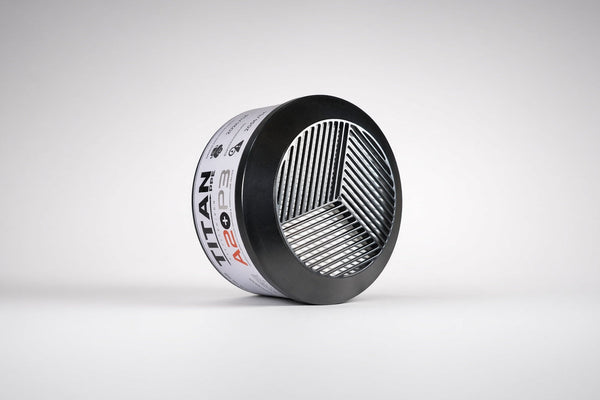
 OVP-10 A2P3 Filter
40 mm NATO thread (EN 148-1), four-stage filtration, 12.5 g activated charcoal, 10-year sealed shelf life.
$29.95Shop now
How to store gas mask filters
-
Keep them sealed
Leave filters in their original sealed packaging until you need them. -
Cool, dry and dark
Store them away from direct sunlight, extreme temperatures, dust and chemicals. Follow the storage conditions printed on the filter. -
Store the mask clean
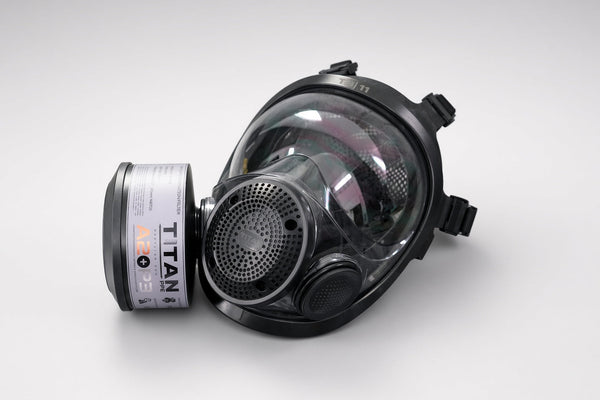
Clean and dry the mask before you put it away. The TinBreather kit includes a metal storage case and a soft carry pouch for the TB-11. -
Label the date
Write the expiry date somewhere you'll see it, like a label on your kit, so you know when to rotate.

When to replace an opened filter
Follow a replacement schedule based on the filter manufacturer's instructions and your exposure conditions. Leave the area right away and check your equipment somewhere safe if you notice any of these while wearing the mask:
- Odor or taste of the contaminant
- Eye, nose or throat irritation
- Breathing that feels noticeably harder
These are warning signs, not a schedule. By the time you smell something, the filter may already be letting vapor through. That's why the change schedule matters more than your nose.
How many spare filters should you keep?
For emergency preparedness, keep at least one spare sealed filter per mask so you can swap in a fresh one when the first is used or expires. The TinBreather kit ships with two OVP-10 A2P3 filters, and replacement OVP-10s are sold individually. Because sealed OVP-10 filters carry a 10-year shelf life, buying spares now doesn't mean throwing them out next year, as long as they stay sealed and stored as directed.
 TinBreather TB-11 Full-Face Respirator Kit
Silicone face seal, six-point harness, 2 × OVP-10 A2P3 filters, metal storage case, carry pouch and manual.
$129.95Shop now
Shelf life doesn't change what a filter protects against
A fresh, in-date filter still only protects against what it's rated for. An A2P3 filter like the OVP-10 handles specified organic vapors (boiling point above 65 °C) and airborne particles within its limits. It is not rated for carbon monoxide, inorganic gases, acid gases or ammonia. And a filter only works if the mask seals: see how to fit a gas mask and do a seal check.
FAQ
Do gas mask filters expire?
Yes. Every filter has a limited sealed shelf life, shown by the expiry date on the filter or packaging. The OVP-10 is rated for 10 years sealed when stored as directed.
Does a 10-year shelf life mean 10 years after opening?
No. The shelf life applies only while the filter stays sealed. Once opened, how long it lasts depends on exposure and the manufacturer’s guidance.
Can I use an expired gas mask filter?
Don’t rely on an expired filter for protection. Replace it with an in-date, sealed filter of the right type for your hazard.
Can I reseal an opened filter to make it last longer?
Follow the manufacturer’s instructions for opened filters. Resealing doesn’t restore the original shelf life, and you should never wash a filter or try to regenerate it.
Will an OVP-10 fit my mask?
It fits masks with standard 40 mm NATO threads conforming to EN 148-1, including the TB-11. Check your mask’s instructions for approved filter combinations, because matching threads alone don’t make an approved assembly.
Browse all gas masks and filters.