





Which Gas Mask Filter Do You Need? A2P3 vs. ABEK Explained
Filter labels look like code, but they follow a simple system. The letters tell you what kind of gas or vapor the filter traps, the number after each letter tells you its capacity, and P covers particles.
What the letters mean
| Code | Protects against | Examples |
|---|---|---|
| A | Organic gases and vapors (boiling point above 65°C) | Solvents, paint and fuel vapors, many industrial fumes |
| B | Inorganic gases | Chlorine, hydrogen sulfide, hydrogen cyanide |
| E | Acid gases | Sulfur dioxide, hydrogen chloride |
| K | Ammonia and ammonia compounds | Ammonia leaks, some cleaning and farm chemicals |
| P1 / P2 / P3 | Particulates (dust, smoke, mist, biological particles) | P3 is the highest class, filtering at least 99.95% of particles |
The numbers 1, 2 and 3 after a gas letter are capacity classes: 2 is medium capacity, the common choice for full-face masks. So A2P3 means "organic vapors, medium capacity, plus top-class particulate protection".
Which one should you pick?
-
Smoke, dust and organic fumes → A2P3
The best general-purpose choice for wildfire smoke, paint and solvent fumes, and dusty or moldy cleanups. -
Unknown or mixed chemical hazards → A2B2E2K2P3
A combination filter covers organic, inorganic and acid gases, ammonia and particulates in one cartridge. It's heavier and costs more, but it's the "cover most of it" option for an emergency kit. -
Check the thread
Full-face masks with a 40mm NATO (Rd40) thread accept filters from many makers. Make sure the filter and mask match.
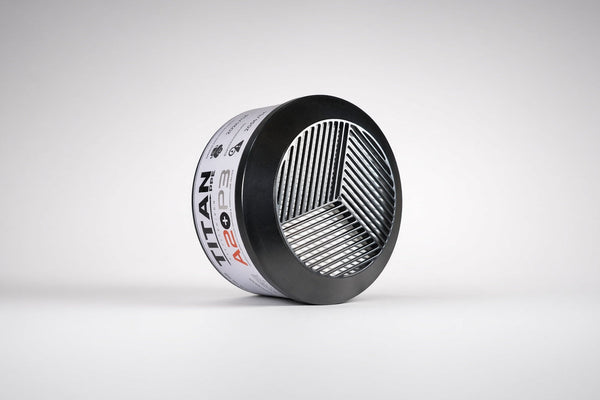
 OVP-10 A2P3 Filter
Organic vapor + P3 particulate filter, universal 40mm NATO thread.
$29.95Shop now
 OVP-11 A2B2E2K2P3 Combination Filter
Organic vapors, inorganic and acid gases, ammonia and P3 particulates in one 40mm filter.
$49.99Shop now
When to replace a filter
- When you smell or taste the contaminant, or breathing gets noticeably harder.
- After the expiry date printed on the filter, even if unused. Keep spare filters sealed until you need them.
- After any real exposure. A used gas filter keeps absorbing from the air once it's open.
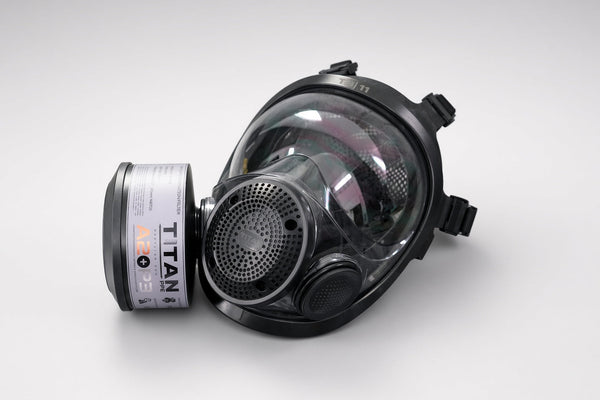
 TinBreather TB-11 Full-Face Respirator Kit
Full-face mask, two 40mm OVP-10 A2P3 filters, metal storage case and carry pouch.
$129.95Shop the kit
FAQ
Does an A2P3 filter protect against smoke?
Yes. The P3 part captures smoke particles and the A part handles many organic vapors in smoke. It does not protect against carbon monoxide.
What does P3 mean?
P3 is the highest particulate class, filtering at least 99.95% of airborne particles such as dust, smoke particles, mold spores and mists.
Do gas mask filters expire?
Yes. Sealed filters have a printed shelf life. Once opened, a gas filter slowly loses capacity even when you are not using it, so replace opened filters regularly.
Will any 40mm filter fit my mask?
Filters with a standard 40mm NATO (Rd40) thread fit masks built for that thread, such as the TinBreather TB-11. Always check both the mask and filter specs.