





How to Fit a Gas Mask and Do a Seal Check
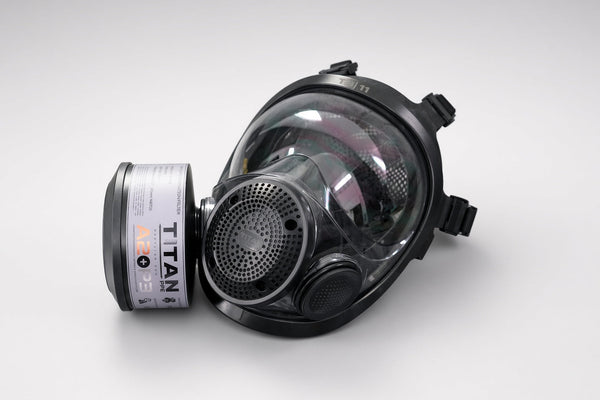
A full-face gas mask only works if air goes through the filter, not around the edge of the face seal. Even the best filter can't help if the mask leaks at the cheek or chin. This guide walks through how to put on a full-face respirator, how to adjust the harness, and the two quick seal checks you should do every single time. We use the TITAN PPE TinBreather TB-11 as the example, but the basics apply to most full-face masks with a 40 mm filter. Always follow the instructions that came with your own mask.

Before you start: inspect the mask and filter
Look over the whole mask first:
- Face seal: no tears, cracks or stiff spots.
- Visor: clean and not cracked.
- Valves: the inhalation and exhalation valves are in place and sit flat.
- Harness: straps and buckles intact. On the TB-11 the harness is an adjustable six-point strap, so check all six attachment points.
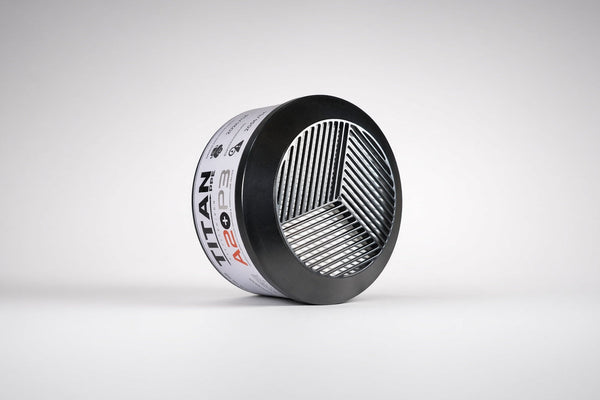
- Filter: the right type for the hazard, still within its date, and stored sealed. Not sure which you need? See Which Gas Mask Filter Do You Need? A2P3 vs. ABEK Explained. Remove any caps or seals the filter instructions tell you to remove, then screw it into the 40 mm port until it's snug.
 TinBreather TB-11 Full-Face Respirator Kit
Silicone face seal, six-point harness, 2 × OVP-10 A2P3 filters, metal storage case, carry pouch and manual.
$129.95Shop now
How to put on a full-face gas mask
-
Loosen the harness all the way
Fully loosen every strap first. Starting loose makes it much easier to center the mask, then tighten it evenly. If the straps are still tight from the last person who wore it, the mask will sit crooked and leak. -
Chin in first
Hold the mask by the harness and push your chin into the chin cup at the bottom of the face seal. -
Bring the seal onto your face
Rock the mask up against your face so the seal rests on your skin all the way around: under the chin, along both cheeks and across the forehead. -
Pull the harness over your head
Make sure the straps lie flat and the harness pad sits centered at the back of your head, not twisted. -
Tighten the straps evenly, in pairs
Pull the mask straight back onto your face, not to one side. A common order is the bottom (neck) straps first, then the side (temple) straps, then the top strap, but follow your mask's manual. It should feel firm and even all the way around. Don't crank one strap much tighter than the others: that bends the seal and opens a gap on the opposite side.

The two seal checks (every time)
| Negative pressure check | Positive pressure check | |
|---|---|---|
| Tests for | Air leaking in around the seal | Air escaping out around the seal |
| Cover | The filter inlet, with your palm | The exhalation valve cover, with your palm |
| Do | Breathe in gently and hold for a few seconds | Breathe out gently |
| Pass | Mask pulls slightly toward your face and stays there | Mask bulges slightly away from your face, no air escaping at the edges |
| Fail | You feel air leaking in, or the mask doesn't stay pulled in | You feel air leaking at the cheeks, chin or forehead |
If either check fails, adjust the mask and straps and repeat both checks. Use the method your manual describes if it differs. Do both checks every time you put the mask on, not just the first time.
What breaks a gas mask seal
- Facial hair. Beards, stubble and sideburns where the seal sits can stop the mask from sealing. The sealing area needs to be clean-shaven.
- Glasses. Ordinary eyeglass temples pass under the seal and create a gap. Only use eyewear setups your mask's instructions list as compatible.
- Hair, hoods and hats. Anything caught under the seal or harness, including long hair, a hood or a hat brim, can cause a leak.
- Uneven straps. One strap much tighter than the others can twist the seal.
- A dirty or damaged seal. Dirt, makeup or a torn seal can stop it from sitting flat on your skin.
Seal check vs. fit test
A user seal check is the quick test you do yourself each time you put the mask on. A fit test is a separate, formal test of whether a specific mask model and size actually fits your face. A seal check does not replace a fit test. In U.S. workplaces where a respirator is required, the employer has to select a suitable NIOSH-approved respirator and run a respiratory protection program, including medical evaluation and fit testing.
Taking it off and storing it
Leave the contaminated area before you take the mask off. Loosen the straps, then pull the mask off from the chin forward. Clean and dry the mask as described in the manual, and never wash a filter. Store the mask somewhere cool and dry, away from sunlight, dust and chemicals. The TinBreather kit comes with a metal storage case, a soft carry pouch and a user manual covering fitting, seal checks and maintenance. Keep spare filters sealed in their original packaging until you need them. Our guide to gas mask filter shelf life covers how long they last.
 OVP-10 A2P3 Filter
40 mm NATO thread (EN 148-1), four-stage filtration, 12.5 g activated charcoal, 10-year sealed shelf life.
$29.95Shop now
FAQ
How tight should a gas mask be?
Firm and even all the way around: tight enough that both seal checks pass, but not so tight that one strap bends the seal out of shape.
Can you wear a gas mask with a beard?
Facial hair where the seal touches your skin can stop the mask from sealing. The sealing area should be clean-shaven.
Can you wear glasses under a full-face gas mask?
Regular glasses usually break the seal because the temples sit under the edge. Only use eyewear your mask’s instructions list as compatible.
How often should I do a seal check?
Every time you put the mask on.
Is a seal check the same as a fit test?
No. A seal check is a quick self-check; a fit test is a formal test of whether the mask fits your face. One does not replace the other.
Browse all gas masks and filters.